Imagine two entrepreneurs. One has thousands of contacts, a crowded meeting calendar and the phone numbers of influential people. The other has a smaller circle of relationships built through years of collaboration and trust. Which one has more social capital? The answer is less obvious than it seems. Research suggests that the most important opportunities may also come from people who are not especially close to us but connect us to entirely different professional worlds.
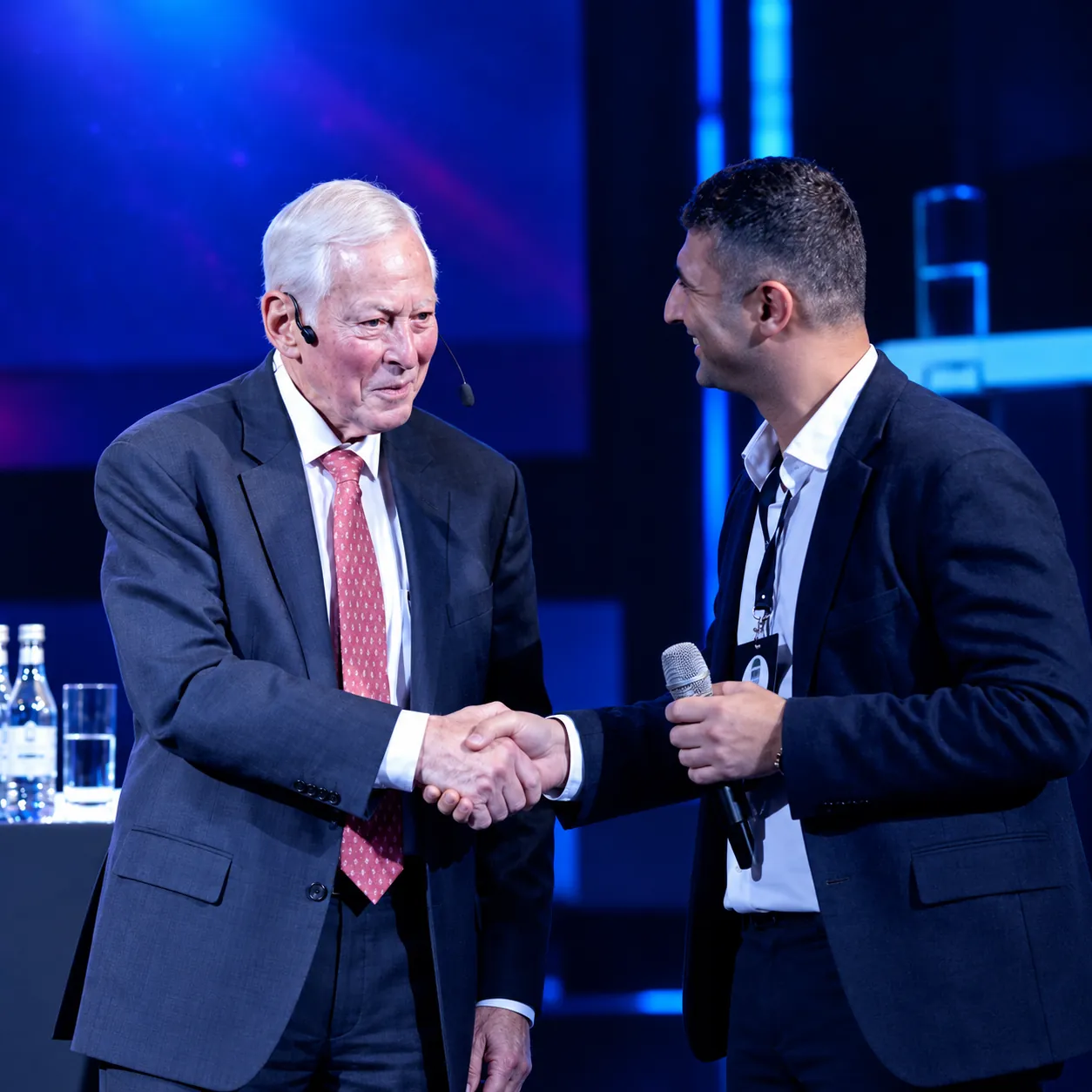
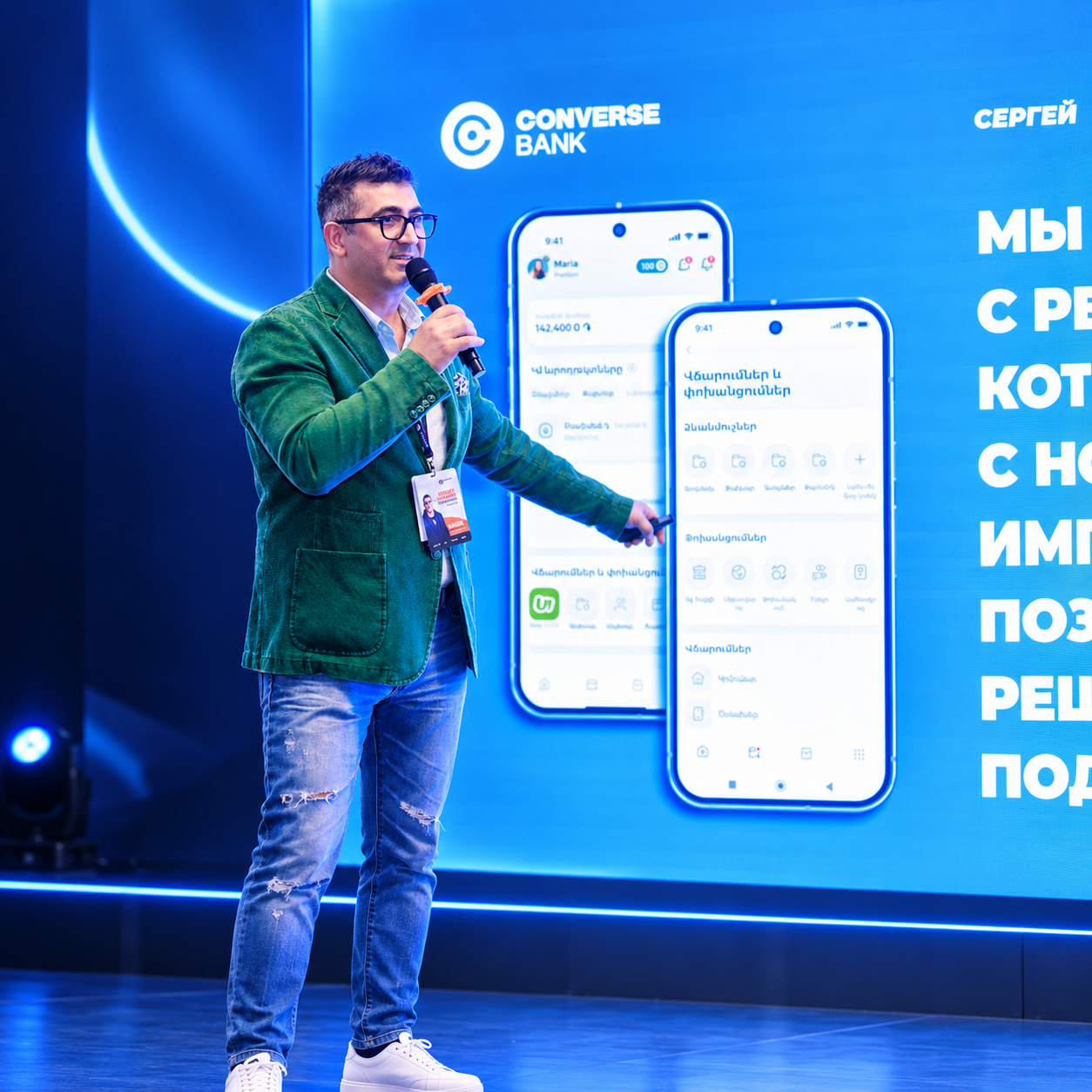
On November 8, I attended Margulan Seissembai's talk in Yerevan on social capital. What interested me was not a promise to collect more useful contacts, but a framework for distinguishing an acquaintance from a relationship, understanding where our limited attention should go, and asking what we can offer others even when they have far greater financial or professional resources. Several of his references resonated with research I had recently explored in my own videos about weak ties and entrepreneurial networks. When a speaker and a listener independently draw on similar books, theories and historical examples, that overlap can reveal a shared intellectual perspective, even if the conclusions and contexts differ.
Social capital is not a contact count
A contact means we can reach someone. A relationship has a history; trust means we have reasons to rely on each other's conduct. Social capital emerges when these relationships give people access to knowledge, support and opportunities for collective action that would otherwise be difficult to obtain. The distinction matters: possessing someone's phone number does not entitle us to their time, and receiving help once does not create a permanent claim on their resources.
In his article “Mistakes in Networking,” Seissembai treats networking as an intentional practice of building relationships rather than collecting business cards. Academic approaches are broader still, examining network structure, reciprocity, trust and the resources made available through relationships. There is no single universally accepted score for social capital, which makes contact volume an especially weak measure of its real value.
Contacts give us a way to reach someone. Trust gives that person a reason to respond.
Circles of attention: what the 10 / 30 / 60 model is for
One practical model presented by Seissembai divides a professional network into three circles: Gold, 10 people (“resources for turning opportunities into reality”); Silver, 30 (“opportunities and resources”); and Bronze, 60 (“a flow of new opportunities”). Seen as a ranking of human worth, such a classification is understandably uncomfortable. Seen as a way to allocate a scarce resource—our attention—it becomes more useful.
Gold
resources for realizing opportunities
Silver
opportunities and resources
Bronze
inflow of new opportunities
During the talk, Margulan referred to the work of anthropologist Robin Dunbar, who studied the layered structure of human social networks. His research often discusses approximate circles of 5, 15, 50 and 150 people. Closer relationships generally require more time and emotional investment. Dunbar's figures are not identical to 10 / 30 / 60, and Seissembai's model should not be presented as a scientifically derived numerical formula. Rather, both draw attention to a basic constraint: we cannot sustain equally deep relationships with everyone we know.
In practice, the Gold circle might mean people with whom meaningful professional trust already exists, the Silver circle may represent a more sustained network of colleagues and partners, and the Bronze circle a broader range of acquaintances through whom new ideas and information arrive. Nobody becomes less valuable as a person by being placed in an outer circle; the framework maps our allocation of attention, not their human worth.
The strength of weak ties and the value of different professional worlds
In 1973, sociologist Mark Granovetter published “The Strength of Weak Ties,” explaining why relatively weak relationships can play a crucial role in spreading information between social groups. Close friends and coworkers often know many of the same people and draw on overlapping sources. A more distant acquaintance, by contrast, may connect us to knowledge and opportunities outside our immediate environment.
A few weeks before Margulan's talk, I used this insight in a video about conferences: sometimes the most valuable conversation of the day happens not during a session but beside the coffee machine. A conference brings together people who might otherwise never meet, creating a deliberately designed opportunity for a useful chance encounter. Margulan also drew on the idea of weak ties, among many others. I found the overlap interesting—not as evidence that one person borrowed from the other, but as a reflection of common research interests.
Sociologist Ronald Burt, another scholar whom Margulan cited, adds an important layer. In “Structural Holes and Good Ideas” (2004), Burt examined the advantages enjoyed by people who bridge groups that do not usually interact. They may gain access to more diverse information and recognize possibilities that remain invisible within a single professional environment. Strong trust inside one industry is valuable, but it does not automatically guarantee a wide perspective.
Over the years, I have contributed in different roles to more than 600 events across five countries, attended collectively by over 120,000 people. Encounters among professionals in banking, technology, marketing, education and the events industry have taught me that sometimes the real contribution is not having the answer, but introducing two people who might find it together. Still, forwarding a pair of phone numbers is not enough: the introduction needs to make sense for both sides.
Sometimes our value lies not in knowing the answer, but in knowing the people who can discover it together.
What can you give someone who seems to have everything?
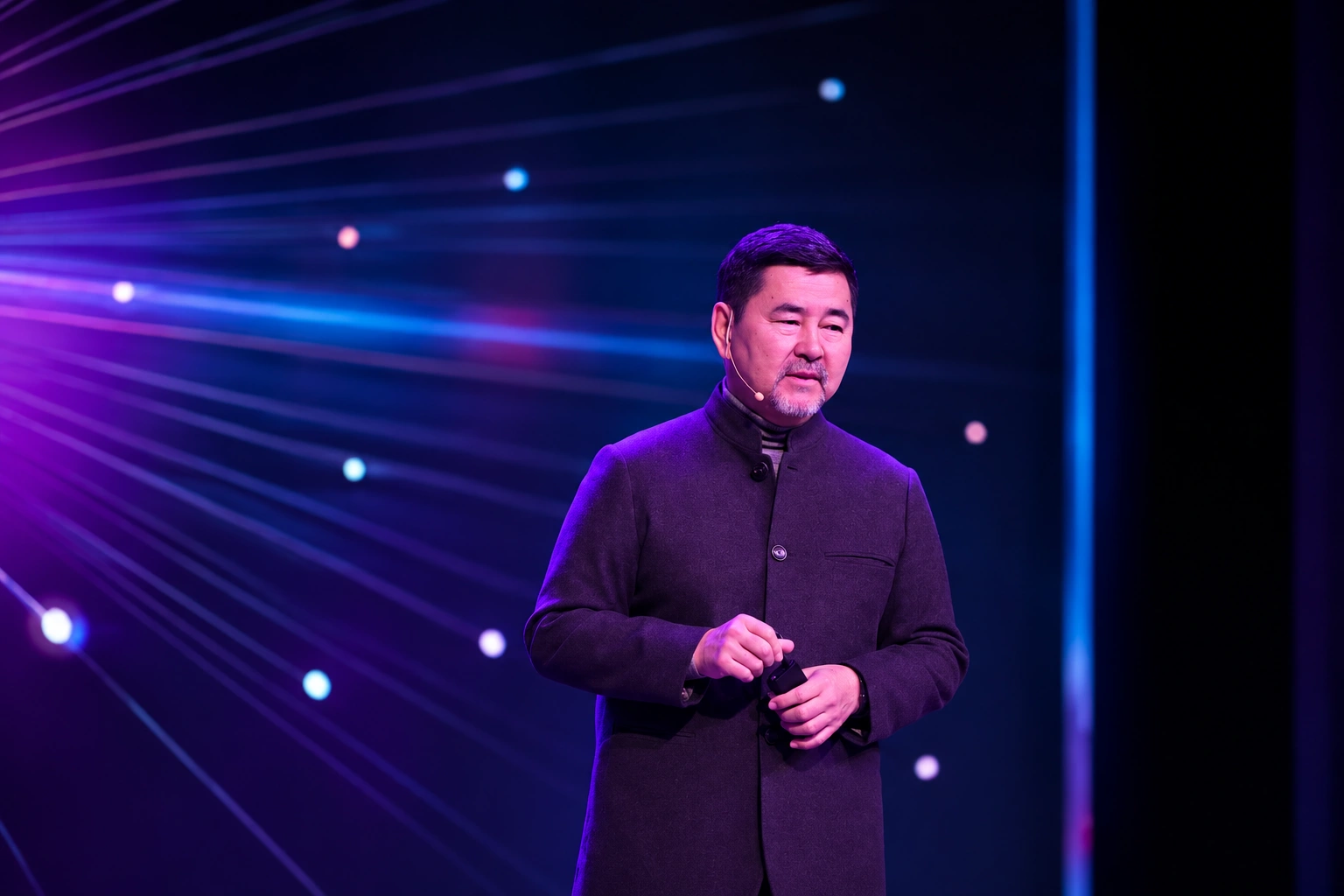
One of the strongest questions in the talk was simple: “What do you give someone who has everything?” Our instinct is to compare money, influence and status, often in the very areas where the other person already has more than we do. Yet the value we can offer may have nothing to do with those comparisons.
Margulan described five dimensions of value: emotions, knowledge, reputation, connections and administrative resources, and money. Emotions include attention, support and shared experiences. Knowledge means expertise and information. Reputation involves credible recommendations and trust. Connections can help people find the right professionals and navigate legitimate institutional processes. Money covers purchases, investments and other financial participation. These are not five tricks for impressing important people; they are five different ways to ask what genuinely matters to someone.
- emotions
- knowledge
- reputation
- connections and administrative resources
- money
An international investor may have little need for another person's money but value detailed knowledge of a local market. A successful founder may appreciate an introduction to a different professional community. Someone facing constant pressure may simply value an honest conversation or a shared experience with no business agenda. And sometimes there is nothing they want from us at all, which is equally important to respect. Being useful begins with listening, not with a determination to appear useful.
Giving more than you receive is not bookkeeping
One of Margulan's slides presented a deliberately simplified balance: contributed 5.0, received 3.0, difference +2.0 “in your favour.” It sounds contradictory if relationships are treated as one-off commercial transactions. But reliability, generosity and fulfilled promises can establish trust over a long period, even when no immediate return follows. Research on reciprocity and social exchange offers a useful parallel: lasting relationships are not necessarily built on instantaneous exchanges of equivalent favours.
That does not mean that endlessly giving more is a healthy strategy. One-sided assistance can produce dependency, pressure and opportunities for exploitation. The real questions are more demanding: do I contact people only when I need something, and do I try to purchase acceptance through excessive favours instead of developing mutual respect? Trust cannot be measured by literally adding and subtracting relationship points.
When does social capital become favouritism?
Margulan frequently used analogies from business, public administration and even the criminal world. His explanation of “blat,” a form of preferential access through personal connections, was especially memorable. Imagine two people exchanging favours and privileges at the expense of third parties or fair rules. Their shared benefit comes from shifting an existing advantage toward their own circle, rather than creating new value.
Now imagine two people using their knowledge and relationships to start a business, develop a product or solve a public problem. They may both benefit, but so do customers, employees or other members of society. The difference is not whether connections are involved; it is what those connections accomplish and whose interests they affect. This is my interpretation of Margulan's example, not a dictionary definition or an etymology of the word.
In a recent video about the “PayPal Mafia,” I discussed a group of former colleagues, including Peter Thiel, Elon Musk and Reid Hoffman, who went on to establish companies and support new ventures. Margulan mentioned some of the same entrepreneurs in a different context. Their history raises a useful question: how can a network of people who once worked together create new opportunities without becoming an exclusive system of privilege?
The strength of a network lies not only in the doors it opens for insiders, but also in the value it creates beyond its own circle.
Using connections is not the same as managing relationships
“Using ≠ managing” was another concise line on Margulan's slides. Using a connection means remembering someone when a problem appears. Managing a relationship means staying in touch, keeping commitments and maintaining genuine interest long before a favour is needed. Margulan also used the metaphor of relationship “temperature”—cold, warm and hot—to describe different degrees of connection and different rhythms of attention.
Research on dormant ties offers a surprising complement. In “Dormant Ties: The Value of Reconnecting” (2011), Daniel Levin, Jorge Walter and Keith Murnighan showed that reconnecting with former professional contacts can generate valuable information. Relationships developed in the past may retain elements of trust while allowing people to bring back years of new knowledge and experience. Before looking for twenty new contacts, perhaps it is worth remembering ten people with whom we once had meaningful relationships.
Seissembai's practical principles are straightforward: save the contact, plan your attention, recognize that different relationships need different rhythms, and create shared experiences. But planning attention should not mean pestering people on a schedule. Sometimes the right gesture is a meeting; sometimes it is useful information; sometimes it is simply respect for another person's space. When asking for help, he also advises being specific, allowing the other person to decline and returning with the outcome, even when the introduction or request does not lead to a deal.
The first step isn't a new introduction. It's the reply you promised long ago.
Why shared experiences can outlive an event
One of Margulan's ideas speaks directly to the events industry: “Strong relationships grow in strong environments. Shared experience is the shortest route to trust.” The study “Sharing Extraordinary Experiences Fosters Feelings of Closeness” (2018) suggests that extraordinary experiences shared with others can increase feelings of closeness between people who were previously strangers, although that feeling alone cannot guarantee enduring trust. An event creates the conditions for a relationship, not the relationship itself.
At one of Margulan's earlier talks in Tashkent, I met a fellow resident of Yerevan who later became my business partner. We lived in the same city, but meeting required travelling thousands of kilometres away. The real value of that gathering emerged afterward, through the conversation and collaboration that continued when the audience had gone home. This is why measuring an event only by attendance or programme quality misses an important part of its potential: what people do together after it ends.

When events become an infrastructure for relationships
It is especially fitting that Margulan’s Yerevan meeting was organized by the Mantashyants Business Club, of which I am a member. The community brings together more than a thousand entrepreneurs and runs more than two thousand events a year. At that scale, events stop being isolated dates on a calendar. They become an infrastructure for relationships — an environment in which people meet regularly, get to know one another, exchange experience and gradually create the foundations for future projects.
It was especially meaningful to see Mariam Pokrikyan on stage — a key member of the club’s team and a graduate of my PROEvents360 programme. We stayed in touch during the preparations, so seeing her on stage at an event of nearly a thousand people was a particularly personal moment for me. It is one of the largest projects she has worked on, and I was glad to see how professionally she now looks at an event — through its purpose, audience, participant experience and the outcome that remains after the final moment on stage.

How can we tell whether social capital is actually growing?
One question rarely gets enough attention in discussions of networking: how should we assess progress without reducing it to business deals or meeting counts? Five dimensions provide a useful practical check. Trust: are there people with whom we can discuss difficult matters openly? Reciprocity: do we create value for others? Diversity: do our connections reach different professional circles? Reliability: do we fulfil our promises? Opportunities: do those relationships lead to shared ideas, initiatives and projects? These are editorial reflection questions, not an official Seissembai instrument or a scientifically validated scale.
The distinction matters because short-term financial results and long-term social capital can move in opposite directions. A profitable deal may damage the trust of those who helped make it possible. Conversely, months without a new contract may still deepen relationships, reconnect former colleagues and lay the groundwork for future collaboration. Measuring only immediate returns obscures precisely what makes this capital distinctive.
Conclusion. The capital you cannot buy
We can purchase equipment, raise funding, hire consultants or commission research relatively quickly. Trust is different. It cannot be purchased in one transaction, granted automatically by a job title or created through a single successful introduction. It accumulates through conduct, promises kept, respect for other people's time, shared experience and a willingness to contribute.
That is why social capital has a characteristic we routinely underestimate: it is built long before its value becomes obvious. When a difficult challenge emerges, success may depend not only on our knowledge, budget or authority, but on relationships developed over years. Yet those relationships do not need to result in a deal or an investment to matter. Sometimes their value is an honest opinion, a different perspective or support during a difficult time.
The most important conclusion I took from Margulan's talk was not a desire to add names to an address book. It was the recognition that relationships begin with our own conduct. We should not only remember who might help us, but also become people others can approach with confidence. The next step might be surprisingly simple: replying to a long-unanswered message, reconnecting with someone we value, or introducing two people who could create something meaningful together.
Our most valuable capital is not the number of people we know, but the trust that grows between us. It cannot be accumulated in a day, yet one day it may enable us to achieve what none of us could accomplish alone.